Showing posts with label Film. Show all posts

Wednesday, May 29, 2013

The Timeless Appeal of the Anti-Hero


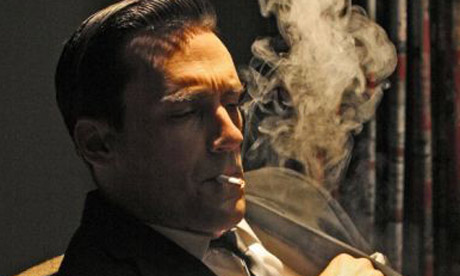
Don Draper: Raised by Hookers.  Serial Womanizer and Philanderer.  Weird, right?

TV geek that I am, I frequent forums to discuss my favorite shows like Mad Men and Game of Thrones.  I keep seeing people post comments like, “This is the show’s protagonist?  THIS guy?  But he’s so unlikeable!  I don’t know if I can keep watching.”

I’m sorry . . . I thought that was the point?

Don Draper.  Pretty much every character in the GoT universe.  Walter White.  Dexter Morgan.  Nancy Botwin.  Al Swearengen.  Tony Soprano.  All these characters do horrible things-- shocking things.  We hate them for it.  And yet, we don’t stop watching—we can’t stop watching. 

Characters shouldn’t have to be likable—they should be compelling.

What purpose does that serve?  Well, mainly they’re just mesmerizing to watch.  How often are the villains more interesting than the heroes?  Anti-heroes give us the best of both worlds-- they may have good intentions, but they're flawed, crippled by desires or ambition.  Like us, they make horrible mistakes.  Often, they keep making them.  Or they keep making the same mistake. 
 
We read and watch films and television shows to step out of ourselves.  Fiction gives us the opportunity to think the unthinkable, to speak the unspeakable, to do the nasty.  If you want a boy scout, go watch Captain America.  If you want someone sweet as pie, check out Pollyanna.  But don’t complain when you tune into a show about people who lie for a living, or a medieval-style fantasy featuring broadswords.  Somebody’s going to get mercilessly whacked.
 
 
Or somebody's going to get thrown off a tower.  Especially if that someone was an eight-year-old boy who just happened to witness Jaime Lannister having sex with his twin sister.  But the man still has a code!  Also, it doesn't hurt that he looks like Nikolaj Coster-Waldau.

 
No one said Don Draper was the hero—just the focus of the story.  And just because Don’s the focus of the story, doesn’t necessarily mean you should like him, either.  And, good Lord, I hope you don’t fucking identify with him.  If you do, what’s wrong with you?  (Unless you grew up in a whorehouse, in which case, I'd say your foibles are understandable.) 

We’ve always been fascinated by reprehensible characters—Macbeth was not a nice guy.  He was weak and easily manipulated, and ultimately responsible for a lot of deaths.  Sherlock Holmes, one of my personal favorites, is actually the consummate Victorian gentleman in Doyle’s stories.  But he has been altered in recent adaptations to come across as a high-functioning autistic or even a sociopath because we are fascinated by the image of Holmes as a crime-solving machine with no social skills.

The Greek gods were petty squabblers and back-stabbers.  Lancelot and Guinevere were adulterers—and so were Madame Bovary and Anna Karenina.  Indiana Jones, Han Solo and Rhett Butler are all scoundrels.  Humbert Humbert is a perv.  
 
Alex DeLarge and Hannibal Lecter are hypnotic.  Becky Sharp and Scarlett O’Hara didn’t play by the rules, and neither did Jane Eyre.  Tom and Huck and Bart Simpson are all rascals.  Homer Simpson is a gross, selfish asshole who paved the way for Peter Griffin.  Patrick Bateman is a psycho.  Tyler Durden is schizo.  Even the Cat in the Hat lured children into misbehaving.  James Bond is a stone-cold killer.  And that’s why we love him.  We love our characters with skeletons in the closet, with monsters under the bed, with toys in the attic. 
 
 
Nancy Botwin: producer and purveyor of illegal substances.  Responsible for multiple deaths and imprisonments.  Burned down a whole suburb.  Also-- mom. 
 

There are happy stories and happy characters.  I like Disney and Anne of Green Gables.  I was amazed at how much I loved Captain America—I had expected to find him a boring boy scout like Superman, but he turned out to be pretty cool. 

In my own stories, I have found that the difference between an anti-hero and a straight-up hero is their backstory.  Usually, something broke them and made them go dark.  People have said, ad nauseum, that the fact that these fictional characters had awful childhoods does not excuse the fact that they’re awful adults. 

Well, no.  But it does explain why they are the way they are.  Most characters need an origin story.  History is not an excuse.  It’s a reason.  We are inescapably shaped by our experiences. 

People complain that after six seasons, Don Draper is still the same fucked-up guy pulling the same, fucked-up shit.  Why doesn't he move forward?   

Well, change is hard ya’ll.  I don’t understand why people look for redemption in these characters.  Sometimes there isn’t any to be found because often, people don’t change.  Some of them even get worse. 

Like in life.  Which is the point. 

If you’re looking for sheer escapism, choose your material carefully.  Not all of it’s entertainment—some of it is art.  And sometimes, it’s the job of art to make us uncomfortable.  That’s why it’s sometimes called provocative—it provokes.  If you want light and foamy, stick to your fucking-close-to-water beer.  Sometimes, the rest of us need something dark and full-bodied. 


Friday, November 25, 2011

50/50: Life is permanent remission


Patrick and I watched 50/50 today.

My immediate reaction was: Holy shit. I wish I could be more eloquent than that, but every now and then, you have an experience that leaves you in holy shit mode.

Watching this movie was like watching our lives—well, mainly like watching Patrick’s life.

One scene in particular struck home for him. Joseph Gordon-Levitt, sitting on the couch, bald, skinny, smoking, in his pajamas, watching The Colbert Report, the coffee table heaped with the accumulation of several days’ detritus.

Welcome to disability and its ugly twin, depression.

In the film, Joseph Gordon-Levitt plays a 27-year-old guy named Adam who is diagnosed with a rare form of spinal cancer. The movie is a great combination of unflinching honesty and humor (Seth Rogen plays his BFF).

I’d heard that the film had mostly gotten positive reviews—and after I watched it, I immediately checked it out on Rotten Tomatoes and found that it got a respectable 94% fresh rating. Reading through the reviews, I found that something the critics kept saying, however, was that the film struggled at times with maintaining a sense of realism.

Um . . . what?

First of all, the film is based on a true story.

I know, I know. Hollywood is not exactly famous for sticking to the facts. But the film was written by Will Reiser—based firsthand on his personal experiences with cancer when he was in his 20s.

Second of all, I’d like to reiterate that, as young people struggling with terminal illness, we found it to be spot-on—it’s almost uncanny. There was a point when Adam is in the hospital, getting prepped for surgery where we both just went, “Ohhhhhh.” It was too much like all the times we’ve been in the hospital.
From the moment Adam is diagnosed, we could relate from everything right down the line: uncaring doctors, a panicking mother, his swift deterioration, dealing with nausea, being the youngest patient in his chemo group, having people not know how to respond when you explain about his health problems, relying on our friends for support.

At one point, after he gets diagnosed, Adam’s office throws a party for him, “so they can celebrate Adam’s life.” It’s the most awkward thing ever. Just a few scenes earlier, the boss was being an utter dick to Adam and now, at the party, he’s hugging him, telling him how much he’s going to miss him. Oy. Patrick and I can relate to how people will completely change their tune when they find out you’re dealing with a massive illness, especially in the workplace. Suddenly, you have friends you didn’t even know you had—or wanted! Friends who hug! Isn’t it nice how facing death can bring people together!

Our favorite part was how the old men of the chemo group -- played awesomely by Matt Frewer and Phillip Baker Hall -- sort of adopted Adam, having bonding sessions over IVs and pot brownies, (Washington, where the film takes place, is a state where medicinal marijuana is legal). When Adam tells them he has neurofibroma sarcoma schwannoma, one of them knowingly says, “Ah. The more syllables, the worse it is.”
I think that these critics are basing the ‘lack of realism’ on their own experiences with illness and the medical establishment as older adults; they have no idea what it’s like to experience a terminal illness as a young adult—how surreal it can be, how alienating. The film perfectly depicts Adam as he wrestles with feelings of shock, helplessness and rage at his situation. In no time, he is like a middle-aged man living in a twentysomething’s body. Again, I can’t tell you how right this is. In my developmental psych class this semester, we just got through talking about how one of the characteristics of middle adulthood is the experiencing of stressful events. As one gets older, the likelihood of going through major catastrophes increases: accidents, illness, the death of a parent, financial crisis, etc.

For some of us, the reality check comes early. If you’re not careful, it can fuck you up good and proper. You can forget how to relate to everyone because you know that death is 100%, but nobody wants to hear that at a cocktail party-- and your mere presence reminds them of that. Fortunately, Adam’s doctor refers him to a therapist. She is, herself, only 24, working on a doctorate. Together, they muddle through Adam’s problems.

Patrick and I were faintly jealous that Adam had cancer—something for which millions of support groups exist. There aren’t support groups for young people with kidney disease. I still can’t get over my luck that I found a shrink in my neighborhood who happens to have a lot of experience with caregivers.

Something else that I kept seeing in the reviews is the abuse that gets heaped on Bryce Dallas Howard’s character. She plays Adam’s girlfriend who cheats on him. I had a lot of sympathy for her. It’s a tough gig, supporting someone through a major illness. It was interesting how the film chose to depict Adam’s mother (Anjelica Houston) as a caregiver—her husband, Adam’s father, had Alzheimer’s. The contrast between the two of them was not lost on me—Adam’s mother had clearly made her choice to stay. Adam’s girlfriend tried but couldn’t do it. Give her credit for that.

My shrink, as you might imagine, and I have had a lot of conversation about this. Why some people stay and why some don’t. Sometimes it’s not the ones you’d expect either—he’s known couples who’ve been married forty years who get divorced at a diagnosis of some terrible disease, while others who are engaged determinedly stick around through messy car accidents that leave their intended as paraplegics. I guess love has its reasons that reason knows not, eh?

But something my shrink has said about the people who do bail—we have to admire them for knowing themselves and their limitations. There is something to be said for that as well.

The film’s title comes from Adam’s chances of survival. What is unspoken throughout the film is how the chances of survival go up when we are surrounded by people who are rooting for us and supporting us and of course, keeping a sense of humor—even if those chances only go up infinitesimally.

I’m not a betting woman, but I’ll take those odds.

Monday, September 5, 2011

Don't be Afraid of the Dark


Where there is no imagination, there is no horror.
–Sir Arthur Conan Doyle

Now that Labor Day weekend is here and summer is officially at an end, I find myself getting nostalgic for horror films—not because Halloween is just around the corner, but because I regret I never have enough time to watch as many horror flicks as I want over the summer months.

More than fall, I associate summer with monsters and madmen and things that go bump in the night. Though as far as movies and stuff go, I got in a pretty good haul this year. Most importantly, I got to write several things that had horror elements, and that’s even better. Coyote and I got a lot done on the O4S series of course, and this week, I just finished a short story entitled, “La Tutayegua,” which was a good old-fashioned horror story, with a terrifying creature, children in peril, and a bloody, tragic ending.

Over the summer, I revisited Poltergeist (1982) and Monkey Shines (1988). I watched a newer film, Let Me In (2010), the American remake of Let the Right One In (2008), which was originally a Swedish tale about a tween vampire that falls in love with a mortal, but it’s so much better than Twilight I can’t even tell you. The two young leads in the original generate more chemistry in a single glance than Robert Pattison and Kristen Stewart could ever hope to spark in a lifetime, even though they’re like 12 and never even share an onscreen kiss. It’s amazing. See it. The American remake stars Chloe Moretz as the vampire, (the actress who played Hit Girl in Kick-Ass). It was well-done, but not as good as its European predecessor because, in my opinion, the chemistry between the two actors was something special—it’s just not something you can replicate.

This past week, I watched Apollo 18 in the theater—terrible! -- but the one I was really excited about was Don’t be Afraid of the Dark.

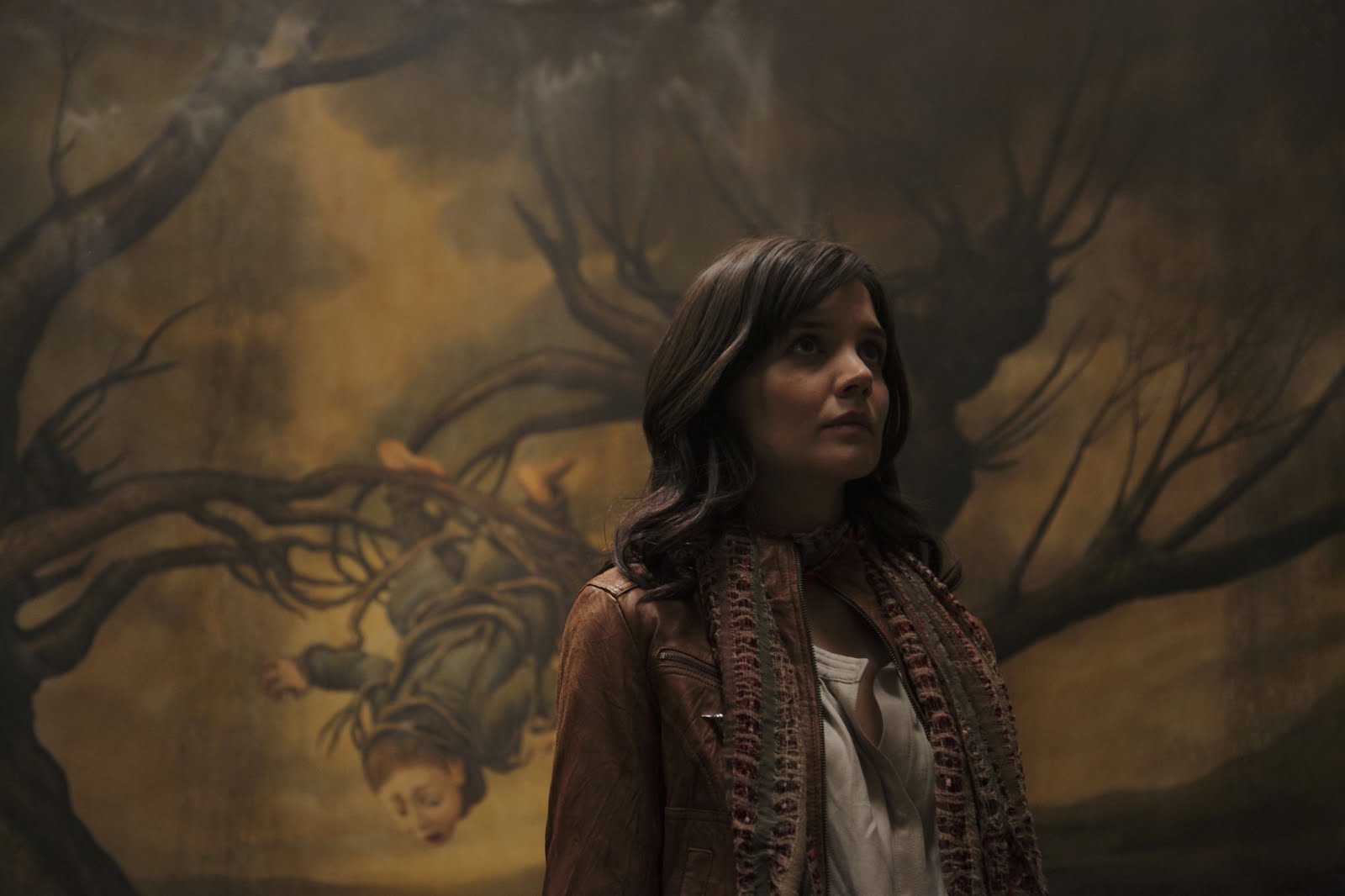
I was beyond thrilled when I heard last fall that Guillermo del Toro was going to be producing an updated version of the 1973 made-for-TV movie. I saw it when I was seven or eight years old. del Toro describes it as the scariest film he’s ever seen, and I am inclined to agree—it gave me nightmares for years afterwards.

del Toro’s genius as a director and an artist has been enumerated by others, so I won’t go all fan girl on you here and wax poetical about why he’s on my list of people I’d love to work with someday. But oddly, our shared terror of the creatures of Don’t be Afraid of the Dark makes me feel a strange affinity, indeed, a camaraderie with del Toro that’s even more powerful than the Mexican-Catholic connection. It’s funny what a strong bond a little terror can inspire.


So, of course, over this summer, I made time to rewatch Pan’s Labyrinth (2006), widely regarded as del Toro's masterpiece, and another one of my favorite films. But I would like to point out that I loved Guillermo long before most people jumped on the sexy Mexican train de amor, mostly because I happen to love Spanish cinema—I was a big fan of the forerunner to Pan's Labyrinth, La Espinoza del Diablo, (The Devil’s Backbone, 2001). I also saw Cronos (1993), del Toro’s first film, which contains so many elements that have become his trademarks—children, clocks, magic, the fantastic and phantasmagoric.

I re-watched the original Don’t be Afraid of the Dark this summer because, well, it’s been over 20 years, and I thought a refresher was in order. But some things had been burned indelibly into my memory.

For example, time had not exaggerated how very scary the little goblin-like creatures were. Having grown up in the 80s, there was a whole slew of films with pint-sized horror critters—Gremlins, Critters, Chucky, Puppet Master, the thing in Trilogy of Terror, and too many other demonic dolls and evil puppets to recall. There was a vignette in Cat’s Eye where some sort of demon came out of the wall and terrorized a young Drew Barrymore that particularly traumatized me. I don’t know why I always found small monsters scarier than big ones but I did and do.

I mean, look at these things. What’s not to be afraid of?


In the original Don’t be Afraid of the Dark, I also remembered their creepy little voices, calling for the main character, named Sally, (played by Kim Darby—Katie Holmes’ character in the remake is named Kim, obviously a nod to Ms. Darby). I remembered that light could hurt the creatures, and I remembered one particularly horrifying scene in which Sally was in the shower, and they came out of the bathroom cabinet and tried to cut her with a straight razor. Yeesh.

While the update of the film, regretfully, was not directed by del Toro—just produced by him, his fingerprints are all over it, stylistically-speaking-- the creatures themselves, the set pieces, the camera work. As the film started, I found myself expecting the characters to speak Spanish just because del Toro’s name had been splashed all over everything. It threw me for a second when they didn’t.

Overall, I was very pleased with the changes to the story. Aside from adding a back story that explained the origin of the creatures in the house, and shifting the protagonist from a young newlywed to a little girl, (which I thought was a wise move), it was very faithful to the original film—even down to the last line of dialogue, which pleased me to no end. One of the things that was so powerful about the original film was its dire ending—especially gutsy in an American movie. Unfortunately, being faithful the original movie meant that the remake suffered the same flaws—which are the same flaws suffered by most haunted house films. Namely, if a house is full of dangerous creatures that are trying to kill you, why the hell would you stay? And if you are being plagued by a bunch of critters the size of squirrels, why would you not pick up, I dunno, a golf club, and start wailin’ away?

If you suspend disbelief however, it’s still a damn scary movie. The prologue of the new film takes place in the late 19th/early 20th century, and features a sequence so gruesome, I’m sure that I bruised Patrick’s arm from gripping it so tightly.


How can I explain my deep and abiding love for all things horror? To begin with, my parents did not censor any of my reading or viewing materials. At all. So I grew up on a steady diet of horror and suspense—fed on Friday Fright Night and Saturday Nightmares on cable, Tales from the Crypt, Garbage Pail Kids, 80s slasher flicks, Scary Stories to Tell in the Dark, Unsolved Mysteries, reruns of The Twilight Zone and Alfred Hitchcock Presents, and even Nickelodeon’s Are You Afraid of the Dark? I loved all of it—watched all of it—devoured all of it. Not to mention the surrealist music videos that filled MTV, the innovative claymation and animated shorts on Nickelodeon, and short films on premium cable stations back in the day, like this one:


Freaky.

As I got older, I got more highbrow—I began reading Lovecraft and Edgar Allan Poe. As soon as I could, I got my greedy little paws on Stephen King and Anne Rice novels.

But I never strayed far from my roots-- the stories we heard as kids about ghosts and ghoulies and madness in our own neighborhood.

A well-known Mexican folk tale is that of La Llorona, which means “the weeping woman,” about whom songs are sung. Kansas City’s West Side, with its large Mexican population, even has its own variation on the legend. The basic story is that a woman with children falls in love with a man who rejects her on the pretext that she has children. She drowns her children in a river in order to be with him, but he rejects her anyway. (“It’s not you, baby, it’s me.”) So she kills herself. When she arrives at the Gates of Heaven, (or Hell, depending on the version), St. Peter (or the Devil) asks her where her children are. She says she doesn’t know. So her spirit is sent back to earth to search for them. She’s used as a cautionary tale—bad children are told that if they don’t do as they are told, La Llorona will get them. You can hear her at night, weeping and calling for her children.

Obviously, in Kansas City, she drowns her children in the Missouri/Kansas river, and she haunts the West Bottoms. In the article I've linked to, you’ll notice the variation where she is cursed to have a horse’s head, which helped inspire the story I wrote this week. I first heard the story of the horse-headed woman from my cousin right around the same time that I first saw Don't be Afraid of the Dark. Scared me out of my wits, as did the tale of La Llorona. It's really amazing that I ever slept at all as a child.

I conceived of the character, La Tutayegua, the Horse Lady, several years ago, a creature with the body of a woman and the head of a mare who haunts the West Bottoms. I knew I was onto something when it gave me such a terrible nightmare that Patrick actually had to wake me up because I was whimpering in my sleep.

Another superstition I grew up hearing was from my great-grandmother—she believed that Death could not come into the light, which is, of course, ridiculous. But her whole life, she slept with a night light. Related to that were all sorts of strange premonitions of death—a widowed neighbor lady began having strange disturbances at night. She thought she was being bothered by a would-be burglar, so she asked my great-grandfather to install a porch light for her. One night, she turned it on, and was terrified to see that the person on her porch was her dead husband. She died a few days later.

In a similar incident, my grandmother swore she saw a strange black shadow appear on the porch of another neighbor’s house. The next day, the neighbor woman was found dead in her house—a suicide, an overdose of sleeping pills. (I do remember when that happened—I remember the ambulance coming to take her body away. The woman’s name was Rosa.)

There was the tale of a relation of ours who believed she saw the devil in an outhouse one day. This would have been back in about 1928. The funny thing is, if you’ve ever read Stephen King’s O. Henry award-winning short story, “The Man in Black,” my relative’s description of the devil matches King’s description almost exactly. That poor woman, over the course of her life, became dangerously insane and spent her later years in the state hospital in St. Joseph—but of course, the question is, did she see the devil because she was insane, or did she go insane because she saw the devil?

For me, one of the scarier stories I heard growing up was about a house on Belleview Street, off of what is now Avenida Cesar Chavez. The house is long-gone. In its place is now the Guadalupe Center. The house that was there belonged to friends of my great-grandparents. In the house was an upstairs bedroom that was haunted by some mysterious entity. Supposedly, if you slept in one of the beds, this strange, invisible force would drag you out of bed and haul you down the stairs, into the garden and deposit you there—always in the same spot. My great-grandfather swore he saw that with his own eyes, and he was one of the most skeptical people I’ve ever known. I asked them if it had ever occurred to anyone to dig up the spot where the force or spirit was depositing them. Well, no—this was well before the days of Ghost Hunters or paranormal societies. And now we can’t—the spot has been paved over to make a basketball court.

I associate horror with summer because I watched horror films at my grandmother and great-grandmother's houses-- we never had cable when I was growing up, but they did. We spent the majority of our time at their houses in the summer. They were also the ones who told us more spooky stories than I can count.

The horror genre is one of the key reasons I am a writer today. Someone asked me recently why I’m a writer, and I gave my usual answer—that I never outgrew my love of fairy tales, of nursery rhymes and make-believe, and that’s a part of it. But fairy tales have but to hang a left and then they become horror stories—big bad wolves, ogres, witches, trolls.

Guillermo del Toro knows this. Check out the tagline for the new Don’t be Afraid of the Dark film:

"Fear is never just make believe."

The imagination has teeth.
Sunday, July 31, 2011

Lessons on Being a Caregiver

I had to take Patrick to the ER today—or, as Patrick put it, we “graced the ER with our presence.”


It has been nine months, after all. Not since last October.


---


I picked a hell of a week to go off Xanax. It was a hell of a week, period: finished out my two summer classes. Finished out two major projects at the office. Triple-digit temperatures. I’ve eaten my way through an entire box of heavy-duty migraine medication—a direct result of said triple-digit temperatures. The heat is cooking my poor brain in its skull like a poached egg.


Worst of all, I had a full-blown panic attack on Wednesday night, the last night of Utopian & Anti-Utopian Lit class.


Like a lot of classes, those of us with a high enough grade were exempt from taking the final. Instead, we got to watch a film, Never Let Me Go. So we brought snacks and settled in to watch the movie and have a discussion about it afterwards.


Never Let Me Go is a crushingly depressing film set in a dystopian, alternate world.  It focuses on three children growing up in what appears to an orphanage/boarding school in the English countryside. But you get the sense early in the film that something is off. Gradually, it is revealed that these children were cloned and grown specifically to be organ donors. They will donate organs until they are dead. It seems that none of them live to see forty. Perhaps not even thirty-five.


I had seen the film before—seen it, and read the book by Kazuo Ishiguro. Therefore nothing in it should have come as any big shock.


Yet about two-thirds of the way through the film, when the main character, Kathy, played by Carey Mulligan, opts to become a caregiver – someone who takes care of her fellow organ donors expressly for the purpose of improving their quality of life – and she goes to visit one of them in the hospital, it felt like someone kicked me squarely in the stomach.


Starting to hyperventilate, I clapped my hands over my mouth to cover up the gasping sounds I was making, got up, and walked quickly out of the room, tears streaming down my face, shaking so hard I wasn’t sure I was going to make it out to the bench around the corner in the hallway—somewhere safely out of earshot so I could break down utterly.


And I knew. It was the hospital setting. The machines. The IV pole. The needles. The bandages. The sight of a person in a hospital bed. An organ donor. The young woman standing beside the bed, bringing cookies, reading aloud from a book, being a caregiver.  Death—especially the idea that someone has to die in order so that someone else’s quality of life may be improved. It was all of those things that triggered the response.


It took me a good ten minutes to pull myself together. I made myself get up and watch the rest of it. I can’t fall apart at the sight of hospitals. I can’t. Sooner or later, I told myself sternly, you will have to go back to one. It’s not a question.


The next day, at work, I had to participate in a tour of our Health Science Institute. Even though I work at MCC, I’ve never actually been around the Institute except to visit its administrative offices, where my boss works. I was aware that it had stuff like a human-patient simulator lab and a virtual hospital, complete with dummies that emulate physiological responses. But I didn’t think about it until we walked into the rooms and I started to feel a bit faint.


“Are you okay?” my boss asked. “You look like you don’t feel well.”


I shook my head. “Just the heat.” And I made it through the tour.


---


So why such a dramatic response? Well, I’ve been seeing a therapist for a little over a month now. I was very fortunate to find a therapist who specializes in adult caregivers, and is, himself, a caregiver—his wife has MS. After hashing out the usual stuff – my own medical history, childhood, etc. -- we’ve just now started getting to the subject of my being a caregiver and what that means.


All this time, I thought I was bad at it. I remember the first time someone called me a caregiver. It made me shift uncomfortably in my chair. I didn’t like it. Then there’s this guy I work with who is, himself, handicapped. Every time he sees me, he takes my hands in his and positively gushes, “Your husband is so lucky, so blessed to have a wife like you—to have someone who sticks by him. I hope he knows that. God bless you.” And I stand there uncomfortably, nodding and thinking, You’re wrong. You’re wrong.


I thought that being a caregiver was something that you’re either good at or you’re not—that it comes naturally, like being able to sing. I forgot that even singers have to practice and rehearse.


And because I thought I was bad at it, I thought I was a horrible person. But that wasn’t it at all. I was confusing having negative thoughts and feelings, which are perfectly normal, with being a bad person. I knew my feelings were normal – anger, resentment, bitterness, guilt, etc. – but knowing that you’re having normal feelings in the abstract is one thing.


Looking at your ill spouse and thinking, I hate you is quite another. And then hearing what a great person you are for sticking around when, in actuality, all you can think about is leaving—well, guilt is a slow poison. It’s more insidious than rage or despair, cuts deeper than depression, leaves runnels in the soul. And, O my brothers, I cracked.


---


My therapist had me list all the things I’ve done (and continue to do) for Patrick since Patrick got sick, and I hadn’t realized how much it amounted to. All the little things. All the big things—including the fact that I do stay.

---


A few days ago, Patrick noticed a bulge just above his groin, low, on his right side. Hernias are common in PD patients—the treatments eventually just wear out the abdominal walls. There were a few other possibilities, like a dislodged catheter, or a build-up of dialysate fluid.


I don’t know why he waited till Saturday to tell me. But as soon as he did and showed me what was wrong, I said we should go to the ER. I’m not even going to fuck around with funny lumps in the abdominal/pelvic region. (The sentences you end up typing in your life!) Any of these problems could jeopardize his catheter site. If there’s a problem with his catheter site, that could potentially mean he’d have to quit PD treatments and go on hemo, and neither of us want that—it would mean a substantial decrease in quality of life.


Patrick didn’t want to go to go to the ER, of course. “What am I gonna say?” he asked. “Hi, please check out the bulge in my pants?” He didn’t think this was urgent enough; he has a clinic appointment on Tuesday. I didn’t think it was something we should let wait, and I said if we called up his doctor, she’d agree with me.


So we packed our bags. Patrick downed a protein shake because who knew when he might get to eat again, especially if he ended up needing surgery.


“I’ll go start the car,” he said when he was done.


“I’ll drive,” I protested.


“I feel well enough to drive,” he said unanswerably. “If it’s all the same to you, I’d rather not wreck, what with you having panic attacks at the sight of hospital stuff and all.”


Ouch. And point.


Our ER-visiting skills were only slightly rusty—the only thing we forgot was to print off a copy of Patrick’s updated medication list. Otherwise, it was pretty par for the course. You can imagine what the ER waiting room might be like on a hot Saturday afternoon at Research Hospital. Two of our favorite ER docs were on the floor, Dr. Richards and Dr. Shanks—Patrick was seen by the latter.


I had called Coyote before we left. He immediately offered to come sit with us. I told him not to, because I wasn’t sure how long this would take, or if Patrick would be admitted or not. But after we’d been at the hospital for several hours, I started to get very hungry. So when Coyote called me for news, I took him up on his offer to bring me food.


Less than five minutes after that, Dr. Shanks came in to see Patrick and pronounced that Patrick did, in fact, have a hernia, but we’d caught it early and it was in no way interfering with his catheter. She said to follow up on Monday with his regular doctor to arrange surgery to get it taken care of. Patrick was dressed and released ten minutes after that.


I tried to call Coyote to tell him to cancel the cheeseburger order, but I couldn’t reach him. So we gave up and went home.


No sooner had we arrived at home, then Coyote called me from the phone in the hospital waiting room. Coyote, being Coyote, wasn’t upset about the mix-up—just glad that Patrick had been released.


“Yes, we apologize for the efficiency of the hospital staff,” Patrick shouted to Coyote from the other room. “Who could have foreseen that?”


---


So here’s what I’ve learned about being a caregiver (in no particular order):


1. Being a caregiver is not an inborn talent. Looking back at my “Hanging Blood” piece where I said I wasn’t a caregiver, I have learned that maybe nobody is. No, I’m not a mother. Maybe there’s no such thing as maternal instinct, either. Look at Casey Anthony. No, I don’t necessarily think that she killed her child. But she was, indisputably, a crappy mother. Maybe there are people who have a knack for it. And then there are the rest of us, who have to learn how the hell you do this.


2. This illness is happening to both of you. This is something my therapist said to me and I’ve thought it over. At first, I thought it was stupid, like those couples who insist on saying, “We’re pregnant.” I used to be like, whatever. But it’s true. From a practical standpoint, of course, an illness of this magnitude is devastating. The first time you open a five-figure medical bill, you go a little dizzy. Both your names are attached to the mortgage and the credit rating. We have been watching the news breathlessly, wondering how Congress is going to come down on the debt issue because it will affect whether we – not he, we – will continue to receive little niceties like disability, Medicare and student loan benefits.


From a more personal standpoint, I’m sure this varies from couple to couple. In my experience, his pain is worse than my own. I have to turn my face away when they so much as come in to run the IV line.


3. BE KIND TO YOURSELF. I could tattoo it on the inside of my arm. This week, the therapist said to me, “I’m starting to get the sense that you hold yourself to some . . . really high standards in every aspect of your life—personally, academically, professionally. . .”


Me: “. . . Yeah. ”


I think there's something to be said about accepting your limitations. I don't know. I’m still working on this one.


4. Finally, I have learned that I am one. A very, very good one.


There. I said it.